
Quick guide
- What happens at a first TMS appointment?
- What to bring before your first TMS appointment
- The safety screening comes first
- How TMS mapping personalizes treatment
- What the first treatment may feel like
- After the appointment
- Questions worth asking in the room
- Frequently asked questions
- Prepare for your first TMS appointment with confidence
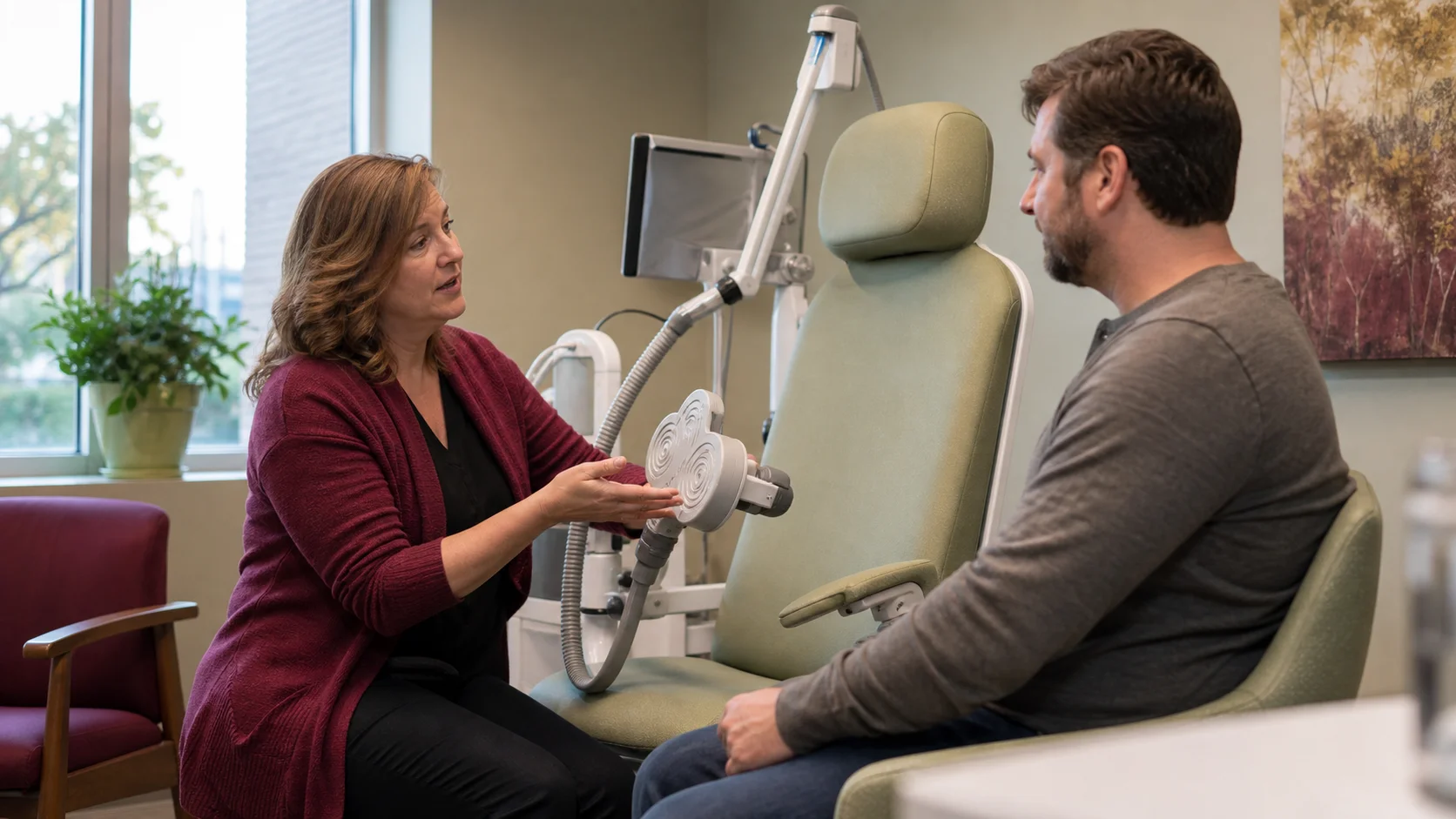
Your first TMS appointment should feel measured, personal, and clear. The clinical team reviews your history, checks safety details, explains the equipment, and identifies the treatment location and stimulation level for your brain. You stay awake, no anesthesia is used, and you can usually return to normal activities afterward.
What happens at a first TMS appointment?
The visit usually has two parts: an eligibility and safety review, followed by treatment mapping. Some clinics complete the first treatment on the same day; others schedule it separately. Plan for more time than a routine session because the clinician is personalizing the settings and answering questions.
Evidence note: The National Institute of Mental Health describes repetitive transcranial magnetic stimulation as a noninvasive treatment performed in a clinic without anesthesia. A typical treatment session may last about 3 to 40 minutes, depending on the protocol.
What to bring before your first TMS appointment
Bring a current medication list, the names and approximate dates of past depression treatments, insurance information, and details about surgeries or implanted devices. Records from a psychiatrist or primary care clinician can help the team understand what has already been tried.
- List prescription medicines, over-the-counter products, and supplements.
- Note previous antidepressants, doses when known, side effects, and why each was stopped.
- Report seizures, head injuries, neurologic conditions, or pregnancy.
- Tell the team about metal or electronic implants anywhere in or near the head.
- Bring questions about work, transportation, costs, and the proposed schedule.
The safety screening comes first
TMS uses rapidly changing magnetic fields, so the team asks detailed questions about metal and implanted devices. The U.S. Food and Drug Administration’s special-controls guidance identifies implants in or near the head, including cochlear implants, implanted brain stimulators, and certain aneurysm clips, as important contraindications or safety concerns. Dental fillings and braces are handled differently, but they still belong on the screening form.
The clinician will also review seizure history, medications that may affect seizure risk, current symptoms, and any recent changes in health. Answering carefully is more useful than trying to decide on your own whether a detail matters.
How TMS mapping personalizes treatment
During mapping, you sit in the treatment chair while the clinician positions the magnetic coil near your scalp. The team identifies a reproducible head position and estimates your motor threshold, the minimum stimulation needed to produce a small movement in a hand or finger. That measurement helps set an individualized treatment intensity.
You may hear clicking and feel tapping on the scalp. Ear protection is commonly provided. Mapping involves brief test pulses and small adjustments; speak up if the position feels uncomfortable. Good care includes explaining what is happening before settings change.
What the first treatment may feel like
Once the settings are confirmed, treatment is delivered in repeated trains of pulses with pauses between them. People often describe tapping, knocking, or tingling near the forehead. Scalp tenderness or a mild headache can occur, particularly during early sessions, and often becomes easier as the body adjusts.
You remain awake and can communicate with the technician. TMS does not require an IV, sedation, or a recovery room. If the sensation is too strong, tell the team; coil position and comfort measures can be reviewed without turning the visit into an endurance test.
After the appointment
Most people can drive, work, study, or continue the day after a standard outpatient session because anesthesia is not used. Your clinician may give different advice based on your medical history or other treatment. Before leaving, confirm the next appointment and the best number to call if a new symptom appears.
One session is not a fair test of whether TMS will help. Depression symptoms are usually tracked across a treatment course with the same rating scale, along with sleep, energy, function, and side effects. A steady record gives the clinician more information than a single good or difficult day.
Questions worth asking in the room
- Which TMS protocol are you recommending, and why?
- How long will routine sessions take at this clinic?
- How will you measure improvement?
- Who reviews side effects or medication changes?
- What happens if I miss a treatment day?
- What costs have been verified with my insurance plan?
Frequently asked questions
Do I need someone to drive me?
Standard outpatient TMS does not use anesthesia, so many patients drive themselves. Ask the clinic for individual guidance if you take a sedating medicine, have another medical issue, or feel unwell on the day of treatment.
Should I wash my hair before TMS?
Clean, dry hair can make positioning easier. Avoid bulky hair accessories around the treatment area. The clinic can tell you whether a particular hairstyle, hairpiece, or extension affects coil placement.
When will I know whether it is working?
Timelines vary. Some people notice changes during the early weeks, while others improve later in the course. Regular symptom scores and clinical follow-up are more reliable than expecting a dramatic feeling after the first session.
Prepare for your first TMS appointment with confidence
A careful first TMS appointment gives you a personalized plan, clear safety information, and a realistic schedule. Patients in Kalamazoo, Portage, Battle Creek, Paw Paw, Comstock, Oshtemo, Texas Corners, Mattawan, Vicksburg, and Grand Rapids can ask Kalamazoo TMS & Behavioral Health whether an evaluation is appropriate.
Ready to ask your questions? Request a TMS consultation and bring your treatment history to the visit.


